Timeline
Over the course of two years, the project ran alongside a live app product, a hardware development cycle, and a six-market launch. There was no dedicated design team.
I was the designer across all digital touchpoints, coordinating with engineering, product management, and the hardware team as the cap moved from prototype to production.
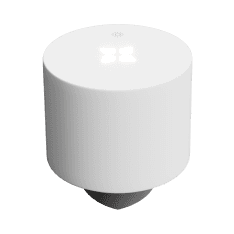
Physical product design
Iterated on the hardware interface alongside engineering: button sensitivity, LED communication states and calibration feedback from early prototype to final production.
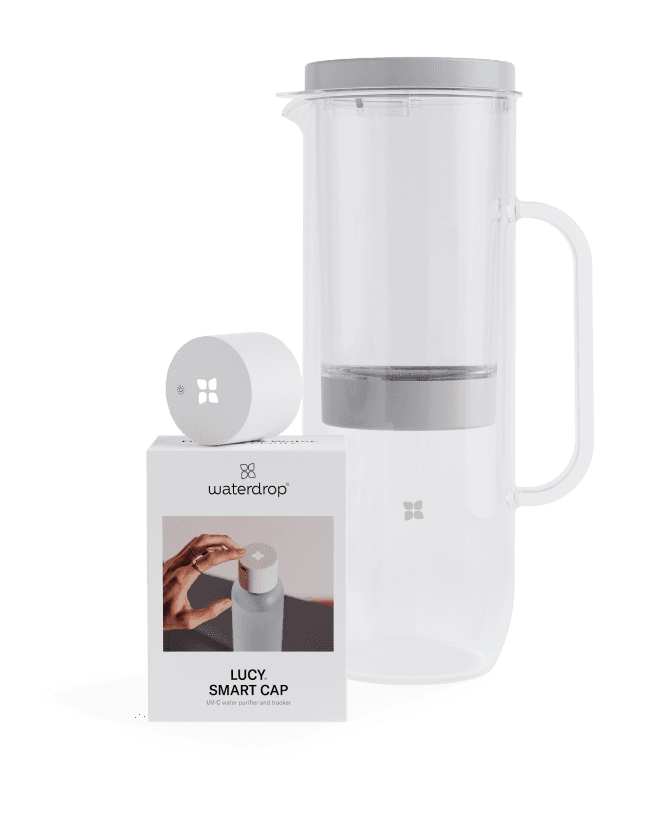
Brand and visual identity
Defined the LUCY sub-brand. A distinct visual language within the waterdrop brand, later extended to the broader filtration product range.
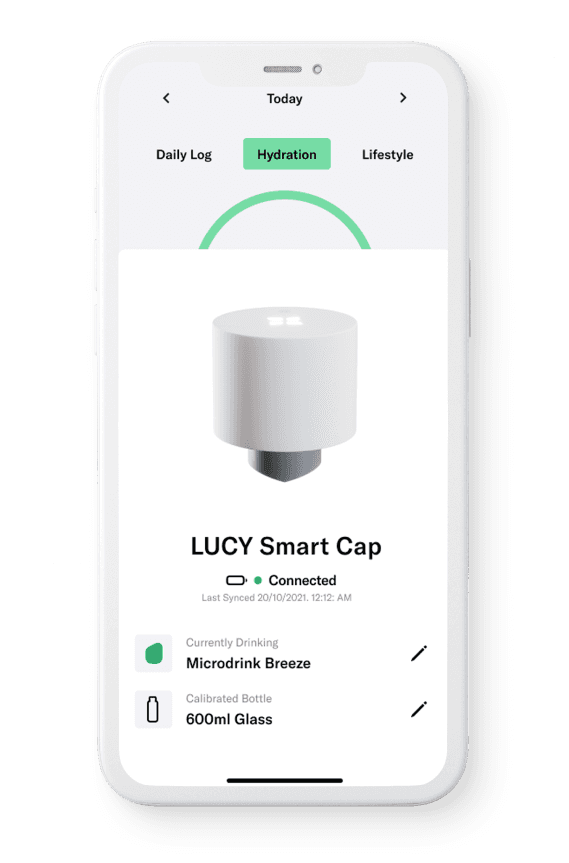
App integration
Designed the iOS and Android hydration app from first prototype to the V2 release that launched with LUCY. Built to work independently when the cap was offline.
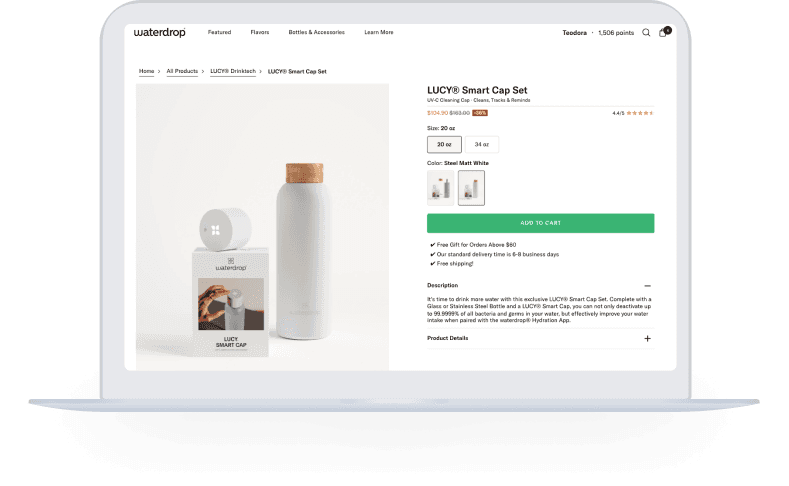
Market launch
Launched in 6 markets in January 2022. 28k+ caps sold in total, alongside 400k+ app downloads.
Research
The research programme ran across six markets before launch: 1,000+ survey responses and 14 interviews covering onboarding, design quality, habit formation, and reliability.
The finding that shaped the most decisions: all four were connected. Reliability issues created habit problems. Habit problems made the onboarding feel worse than it was.
Onboarding
Setup and first-use surveys with 560+ users identified where customers lost confidence in the initial experience.
Design
Design quality and perceived durability were tested with 500+ users. 90% reported no visible wear after regular use.
Habit
5-day diary studies with 30 users across six markets (5 per market: DACH, IT, FR, EN, ES, NL) captured how LUCY fit into daily routines and where it didn't.
Functionality
Reliability testing with 560+ users surfaced two primary issues: measuring accuracy, flagged by 28% of users, and connection stability, flagged by 25%.
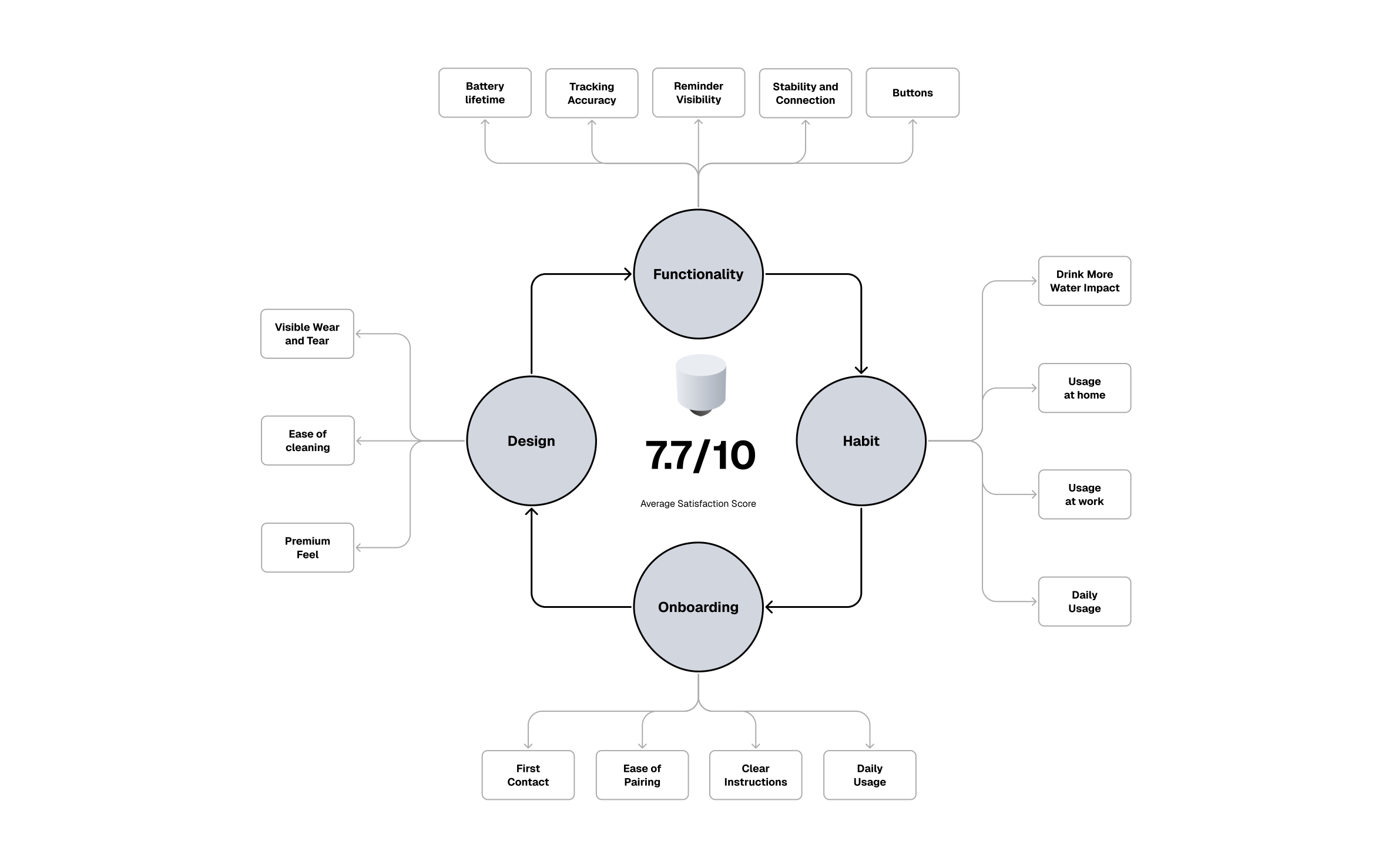
March 2022 LUCY user surveys (562 participants).
Refining the Physical Product
Batch testing ran across four rounds before launch. By Day 7, UV-C purification was the most-used and most-valued feature, rated 8.2/10 for reliability. Hydration tracking scored 7.4/10.
The gap flagged something important: the tracking hardware had constraints the design couldn't fully resolve, which shaped how the app was built. Two decisions came directly from the test results.
A simplified interface
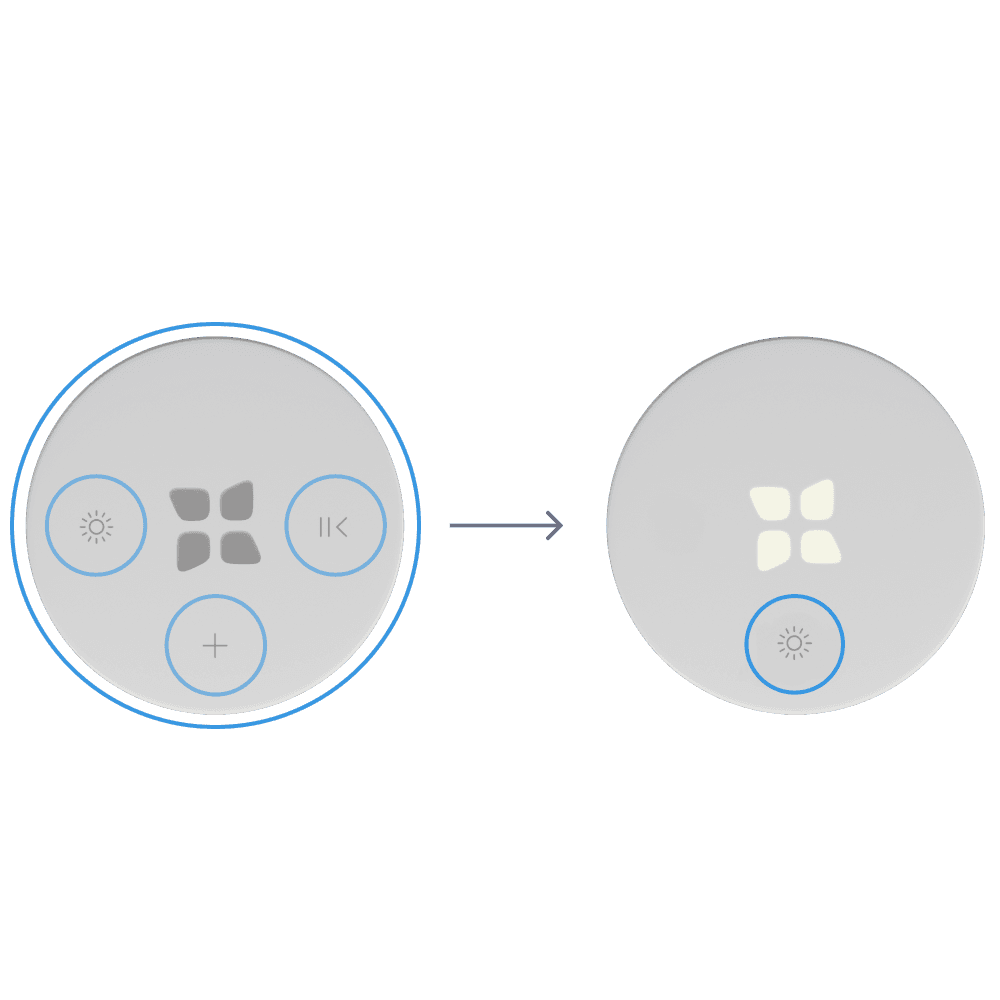
56% of batch testers found three buttons confusing. The Play/Pause button was the worst offender: most testers in the first batch had no idea what it did.
he interface was simplified to a single multi-purpose button with distinct touch interactions. One button to learn, one interaction language across the whole product.
Clearer light communication
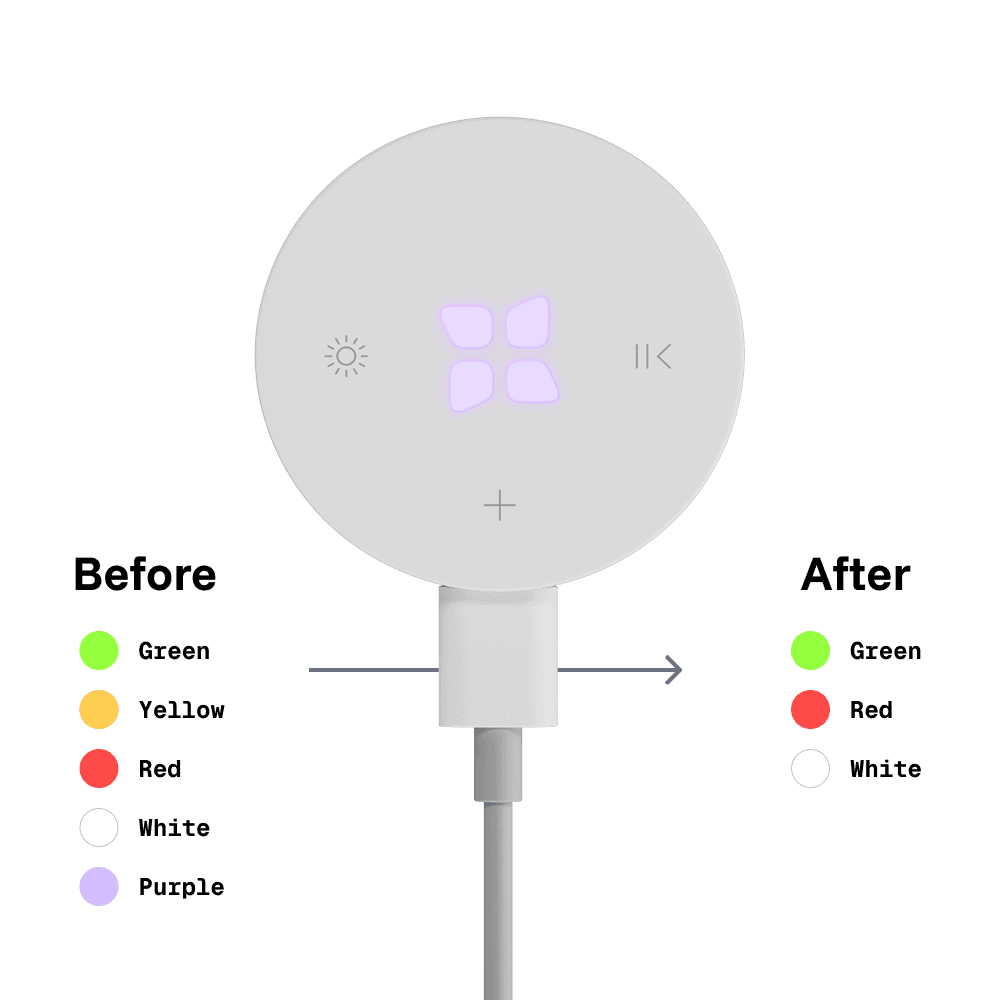
46% of batch testers were confused by the number of colours LUCY used to communicate.
The signal system was reduced to three: one for connection status, one for drinking reminders, one for UV-C cleaning. Less to remember, faster to read at a glance.
Packaging
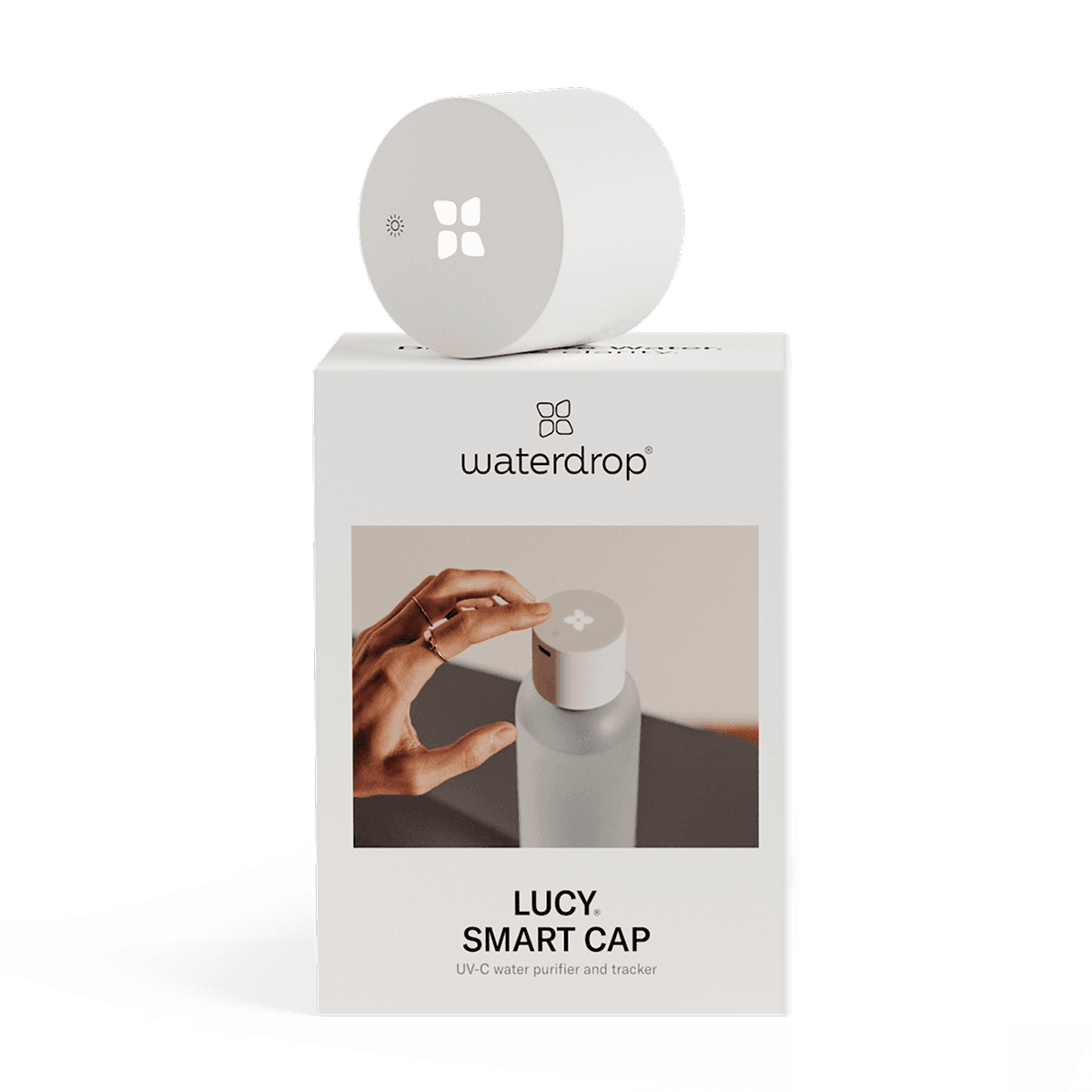
The original packaging was round, which created a vacuum effect when opened. The thick cardboard made it worse: some users had to physically tear it apart to get inside.
I redesigned it from scratch: square format, structured opening, no vacuum issue. A better unboxing is still part of the product experience.
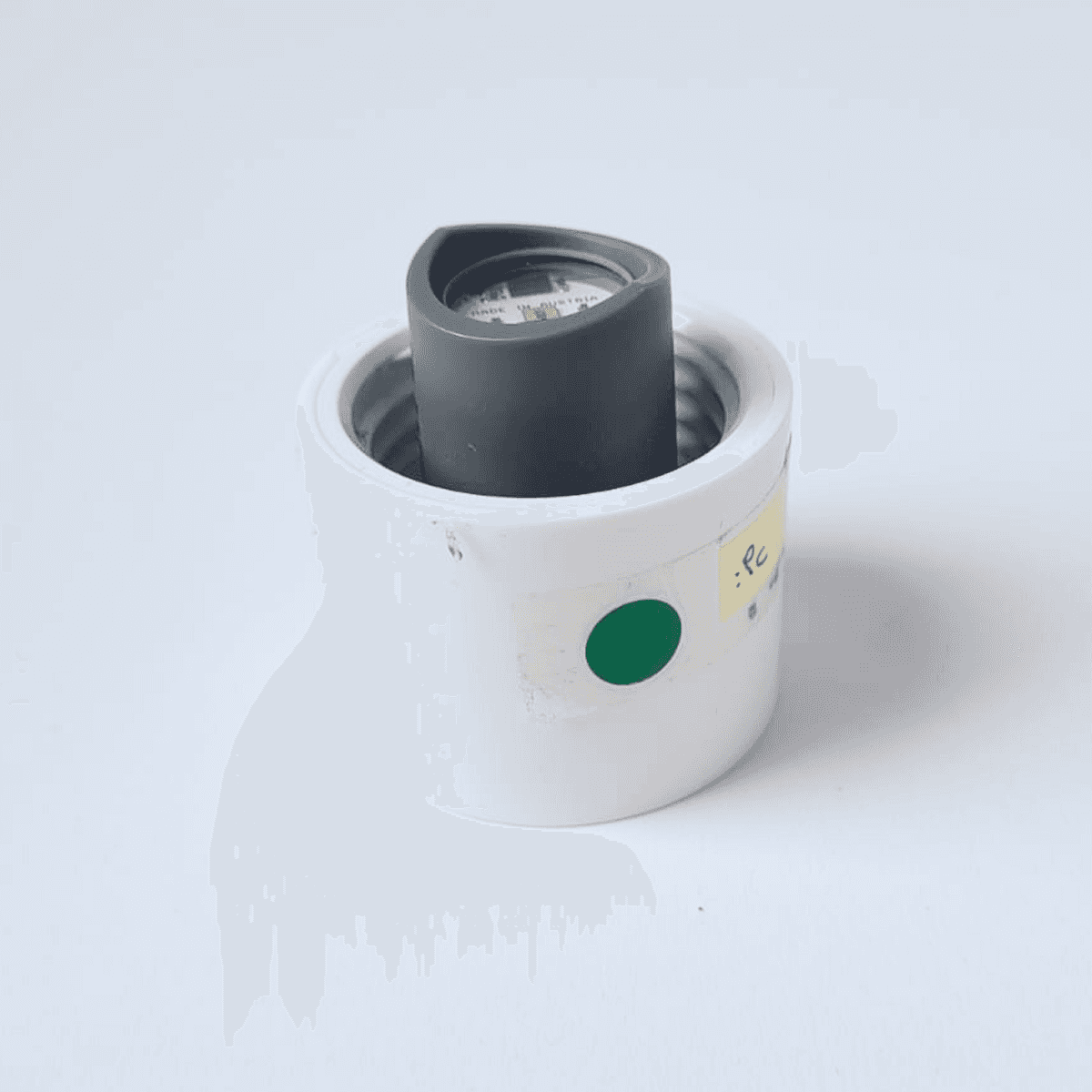
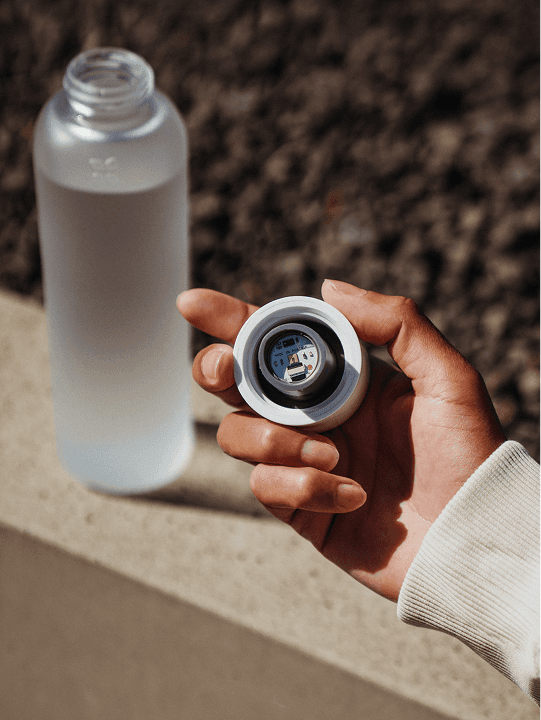
Early hardware prototype. At this stage, we were still testing basic form factor before any surface finishing.
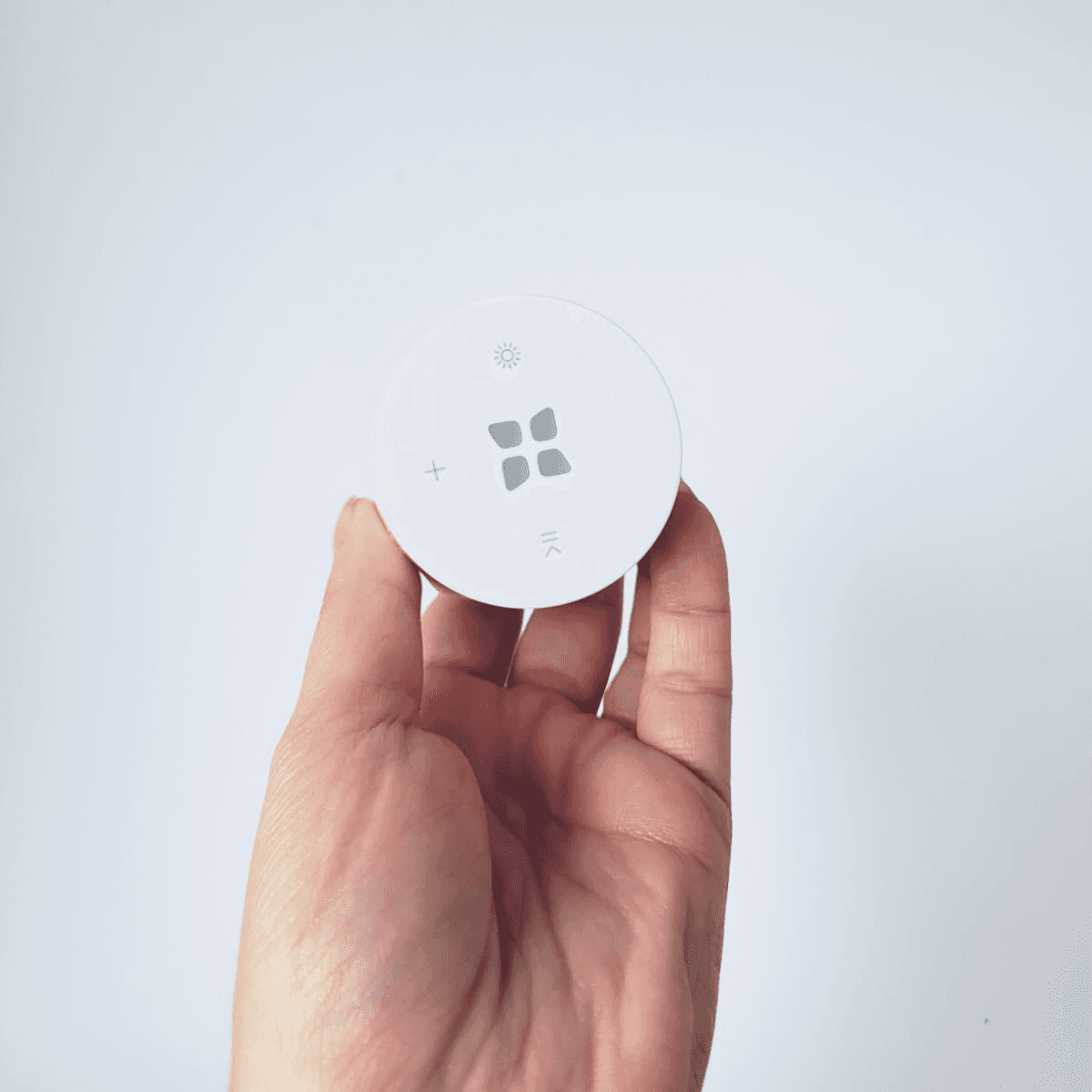
One of the first physical prototypes. The USB-C port position and internal layout were still being worked out with the hardware team.
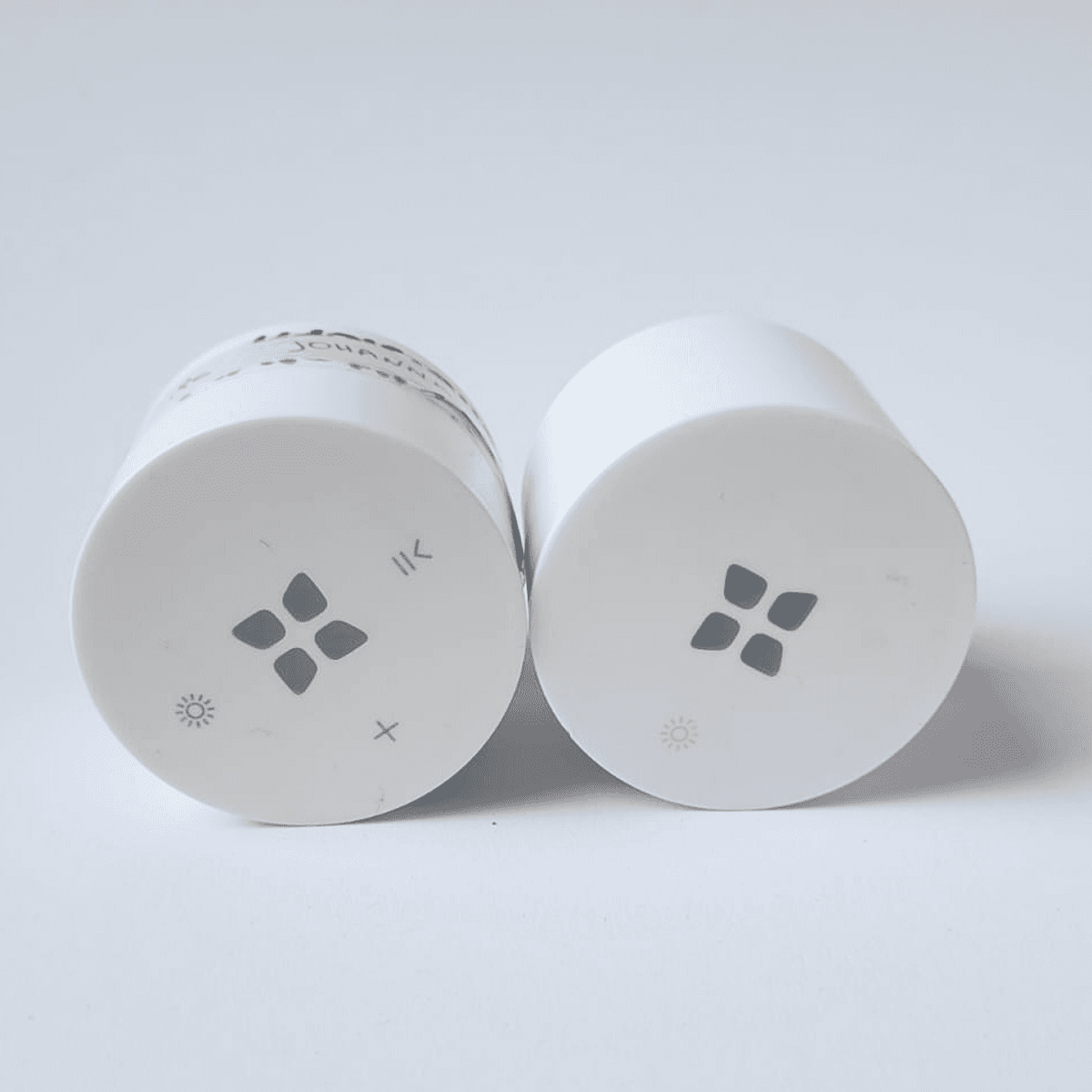
V1 and V2 interface side by side. Four touch icons reduced to one after 56% of batch testers found the original confusing.
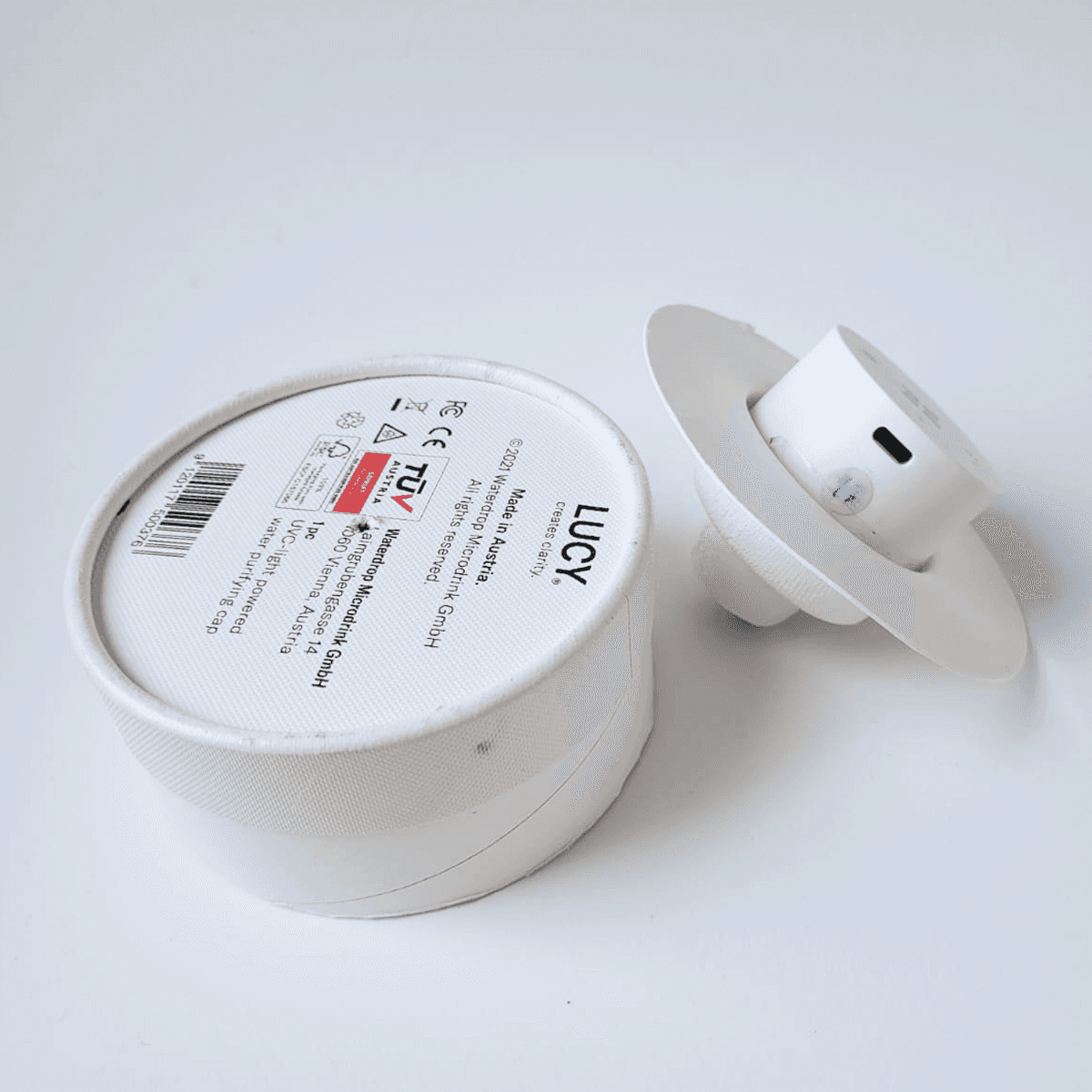
The original packaging. The round shape created a vacuum effect when opened — some users had to physically tear it apart.
Designing the Digital Product
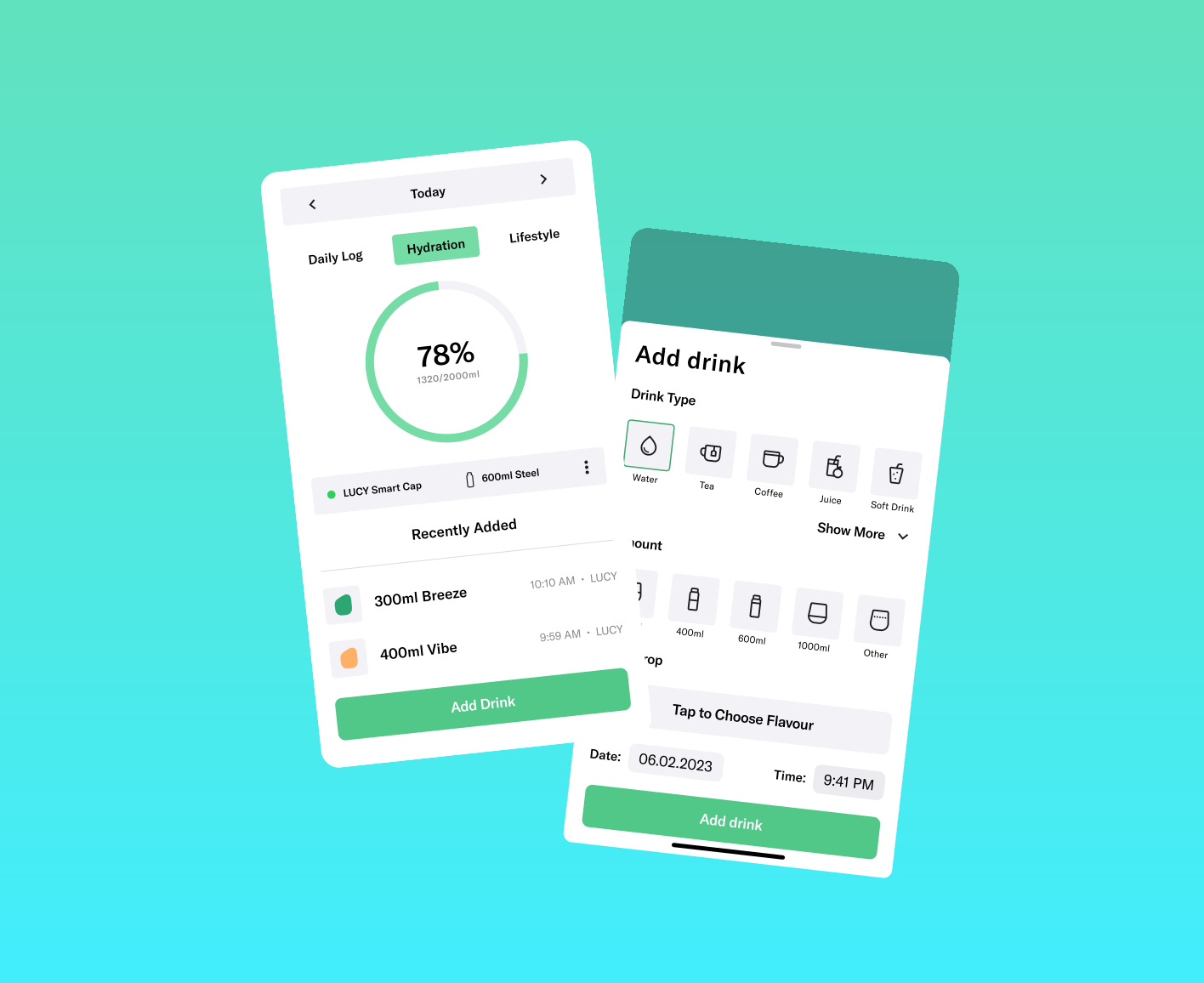
When LUCY launched, the hydration app launched with it. The app had been rebuilt from scratch in the year before: the original agency build had a single home screen and a failing architecture. V2 was designed in parallel with LUCY's hardware development, over the course of a year. It launched in January 2022.
The app has its own story. This is the part that was directly shaped by LUCY.

Onboarding for a hardware product
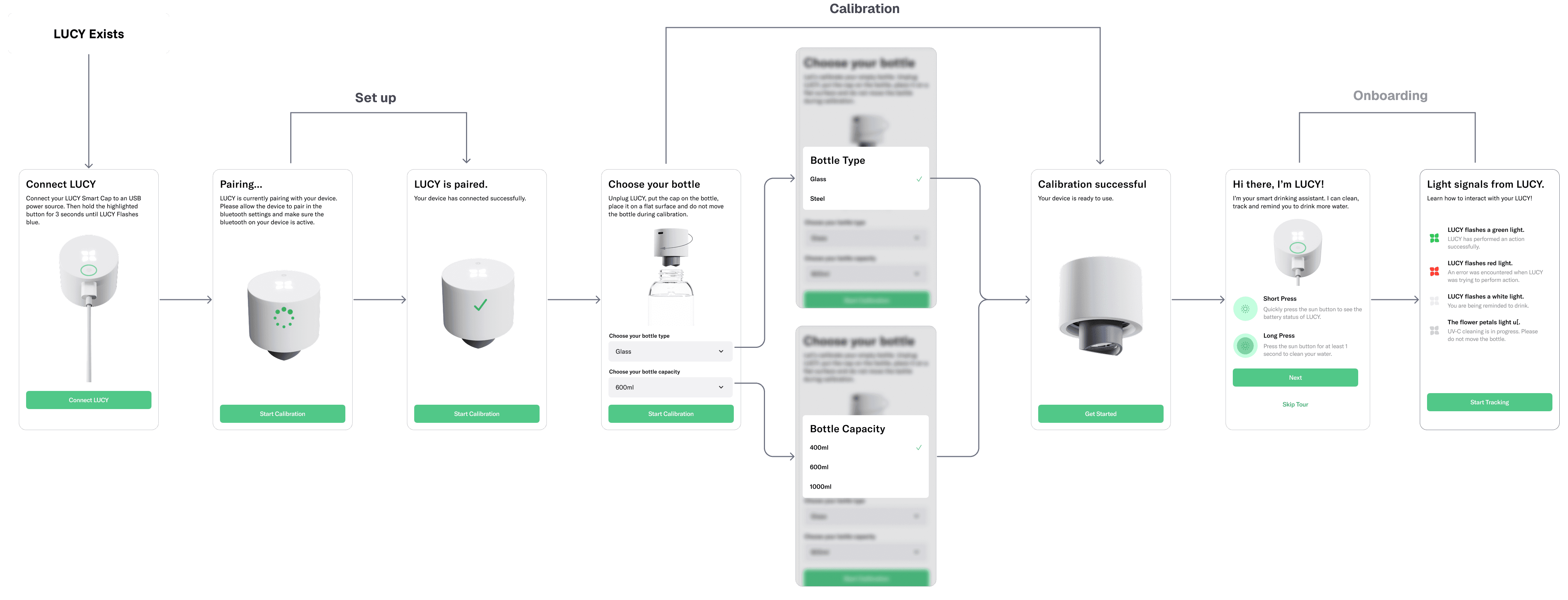
Most users assumed LUCY would work with any bottle out of the box. It didn't. Accurate tracking required calibration: choosing bottle type and material before the cap could calculate volume.
A structured pairing flow guided users through setup and calibration before they reached the home screen.

Designing for offline
Measuring accuracy and unstable connection were the two most-cited post-launch complaints, flagged by 28.4% and 24.8% of LUCY users.
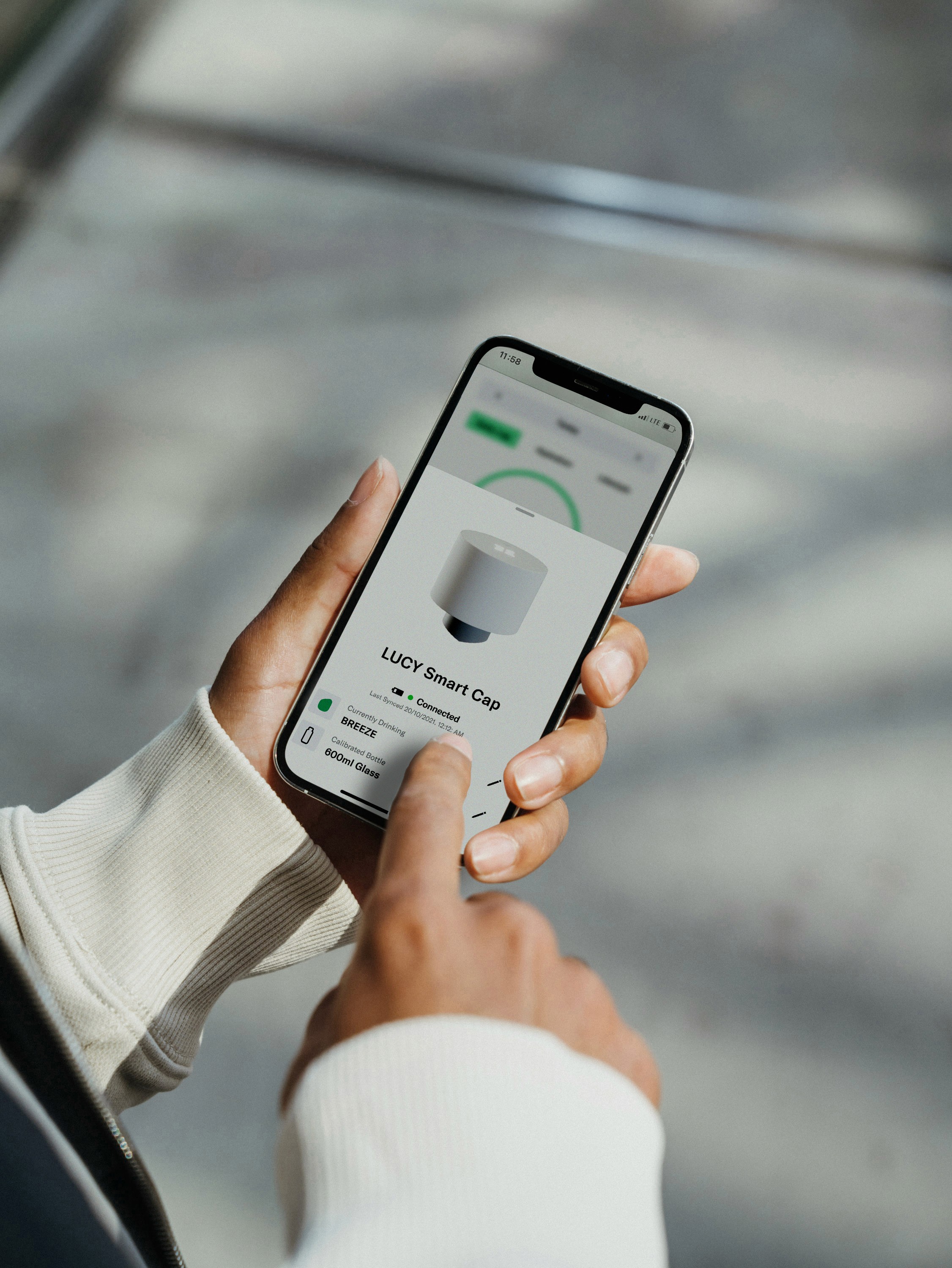
Both were hardware constraints. The app was built for resilience: a functional standalone tracker first, with LUCY data layering on top when available.

LUCY® Cap as the accelerator
Smart Cap users earn double points across all gamification activities. The longer someone uses LUCY, the faster they advance. Hardware adoption and app engagement pull in the same direction.
The app story in full
The hydration app is a five-year story on its own — a V1 rebuilt from scratch, features designed and killed based on evidence, and a product architecture decision that eventually became a separate app generating €1M per month.
Launch & Impact
LUCY launched on 19 January 2022 across six markets. 28k+ caps sold across six markets. 91.6% of purchased caps were successfully paired with the app, validating both the onboarding flow and the physical setup experience.
Post-launch revealed pairing and calibration issues, both hardware constraints addressed through better in-app communication. App users showed 19.3% higher average order value; 30-day retention improved from 9.3% to 18.5%.
The product won a Red Dot Award in 2022.
Reflections
Designing across hardware and software means accepting that some user problems are outside design's reach. The diary studies across 30 users told us a great deal about habit formation but they didn't tell us enough about first use. The moment a customer takes LUCY out of the box alone, with no one to help calibrate it, was the question we should have asked first.
If I were starting again, I'd get involved in hardware decisions earlier and test that assumption before launch. The expectation that LUCY worked straight out of the box was discoverable, we just didn't get there in time.
©2026 Teodora Gheorghe