Building a global content framework
Operational Scale
2023 - 2024

Five teams, 22 markets. Each solving the same problem from scratch.
My role
I led 20+ cross-functional sessions over 8 months to get five teams: marketing, ecommerce, SEO, paid social and brand onto one content structure, with a PM and 4 devs. I defined the content model and naming conventions, configured Shopify Metaobjects with the PM, and built the Figma templates that mirror the live system.
Impact
The result: 50% reduction in production lead times, €300k/year in recovered capacity, and a content architecture that became the foundation for a new product generating €1M/month.
The baseline
Manual scale meant that each product launch started from scratch.
Every launch meant building pages from scratch. Shoots produced 35–40 assets with fewer than half making it to production. Copy was written before images were confirmed. Marketing and ecommerce were claiming ownership of the same pages. Teams finished hours before go-live.

Average launch timeline.
The negotiation
Building a shared content structure solved the speed and alignment issues.
Getting five teams onto one structure meant 20+ alignment sessions. SEO wanted subtitles under collection titles. Marketing wanted a benefits section. Paid social wanted fewer products per page. Each made sense alone. The job wasn't compromise. It was finding the constraints that held across every use case, then building the naming convention around them: prefix, purpose, size. It's still in use today.
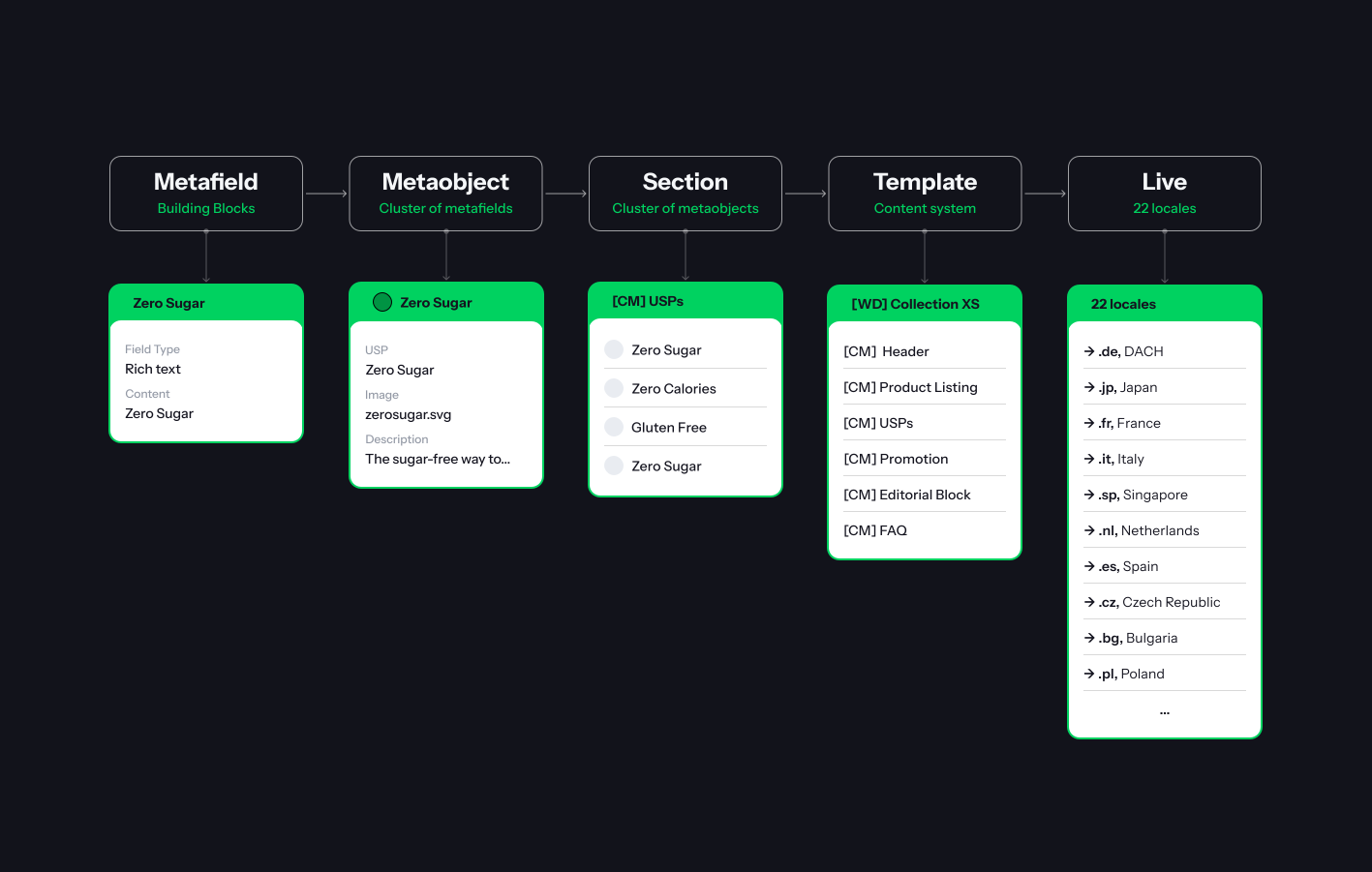
One USP propagates to all 22 locales.

Prefix, purpose, size. Anyone can read what a section is and where it belongs.
The architecture
Reusing content became the foundation for fewer processes.
Most content problems get solved with more process. I wanted to solve this one with less: a model tight enough to create consistency, loose enough that teams wouldn't route around it. Templates are sized by how much a customer needs to understand before buying, not by SKU or market. A coaster is XS. The LUCY Smart Cap is XL. Each layer does one job: Metaobjects hold the content, sections group it, templates present it. Markets adjust copy, never structure.

Atomic content blocks
From content units
Small, clearly defined content units hold the source information. These are created once and reused wherever needed.

Building blocks
To sections
Metaobjects are grouped into sections that can be combined and reordered based on context and use case.


Sized by how much a customer needs to understand before buying — not by SKU.
The rollout
Driving adoption: building structure with the teams, not for them.
A framework nobody uses is just documentation. So I built it with teams, not for them. Every team knew what was coming before it launched. The hardest negotiation was convincing them a shorter page would outperform a longer one. A/B tests and Clarity scroll data settled it: the long version was €40k of content for 6 conversions. Each section had to earn its place.
Every launch now runs on the templates — around 10% need something bespoke, and we clean it out after. The templates have evolved since. The framework hasn't. That's the proof it held.
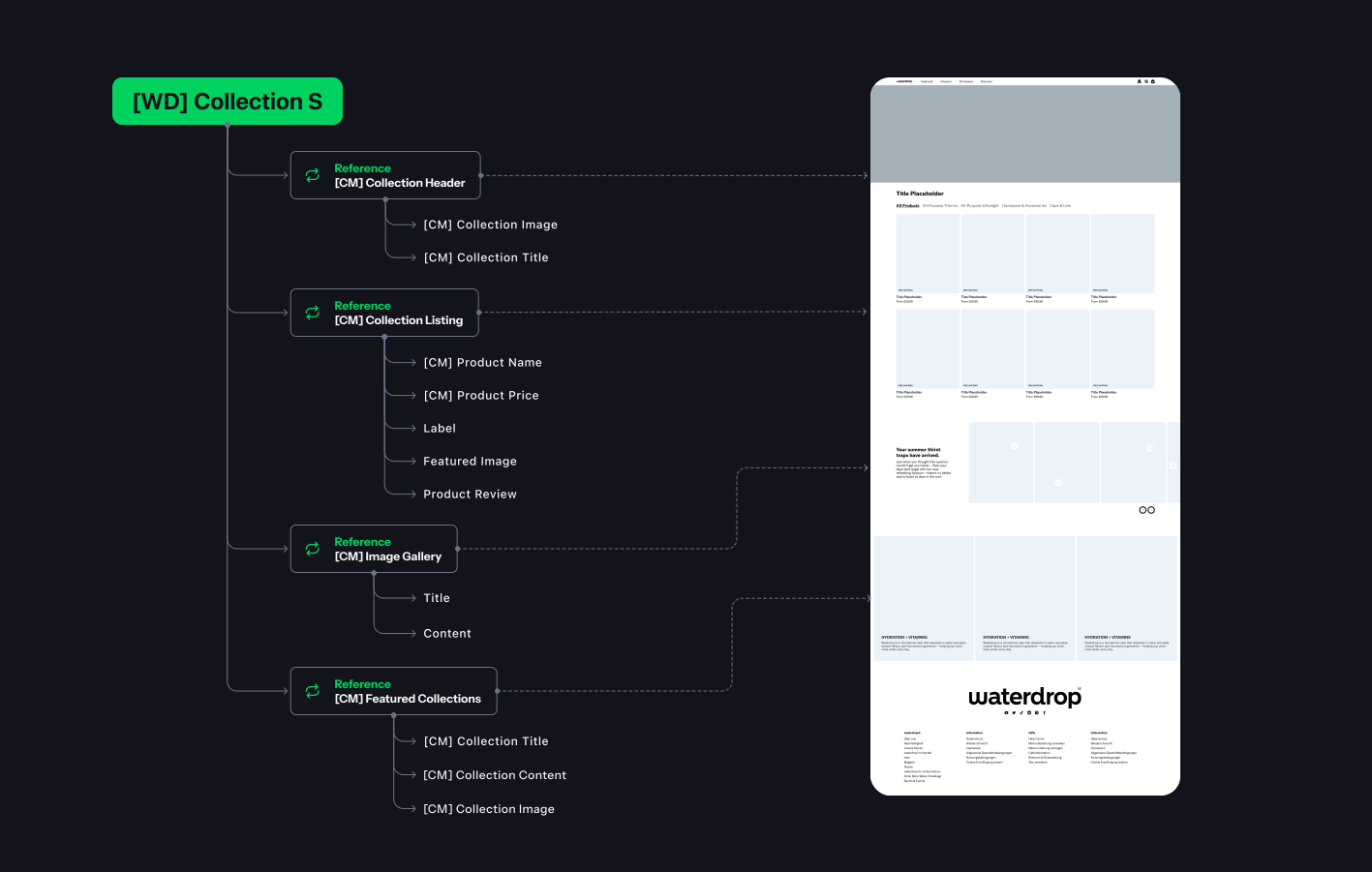
A live collection page and the content behind it. Nothing on the page is hardcoded
Infrastructure
A good system foundation makes scaling across platforms intuitive.
In 2024, waterdrop launched a standalone shop app on the same content architecture. It now generates ~€1M/month. The system didn't just fix a website. It became infrastructure for a new product.

The 2024 shop app, on the same sections. No new content model.
What changed
Impact and metrics
The framework became the foundation for how waterdrop® scales content globally. But more than the system itself, the lasting impact was a team that no longer needed design to move.
€300k/year in recovered capacity
Calculated with the CTO based on assets produced but never shipped, and hours lost to rework across teams.
50% reduction in production lead times
Requirements predefined and templates in place before the launch clock started.
9/10 launches ship without design
Teams assemble pages from existing sections. Design only touches the 10% that need something new.
25+ custom content sections
Enough flexibility to assemble any page, within a structure that stays consistent across 22 markets.
Reflections
The most durable design work is often invisible.
The hardest part wasn’t the design. It was holding the line on shorter pages when every stakeholder’s instinct was to add more content. In a DTC company, more always feels safer. Convincing teams to trust the data over their instincts took longer than building the system itself. Nobody sees the naming convention or the Metaobject structure. They just notice that launches stopped being chaos.
©2026 Teodora Gheorghe